
Loading...
Serving Gary, IN and surrounding areas. (219) 883-1258
Cracked, heaving, or moisture-stained basement and garage floors are common in Gary's older homes. We install new concrete floors with the subfloor prep and vapor barrier work that northwest Indiana conditions actually require.
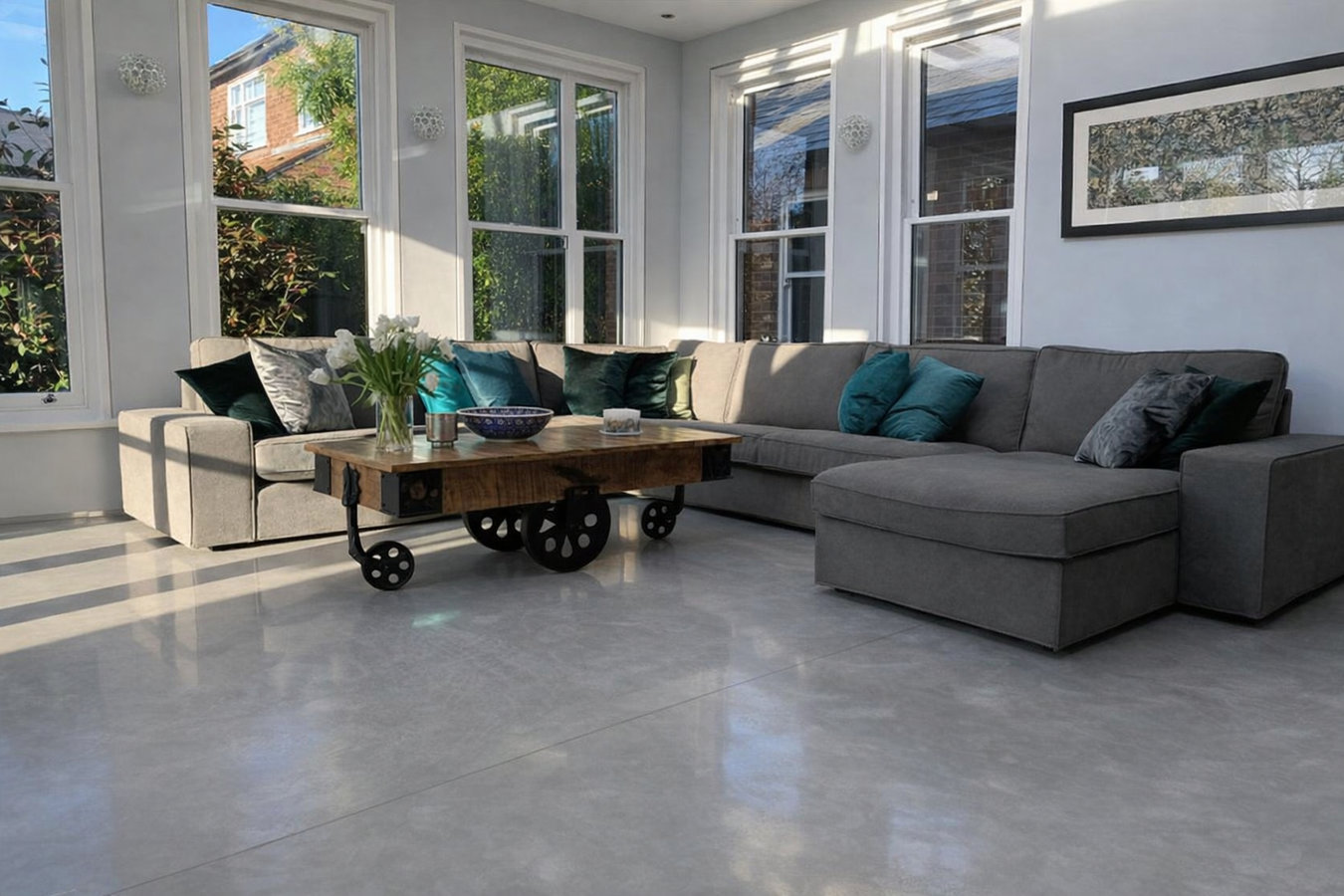
Concrete floor installation in Gary means removing whatever is currently there, compacting the ground underneath, adding a vapor barrier if moisture is a concern, and pouring a fresh continuous slab. Most residential basement or garage floor jobs take one to three days of active work, with a 24 to 48 hour wait before walking on the surface and about 28 days for full curing.
Gary's housing stock is dominated by homes built between the 1920s and 1960s, and many basements in those homes have original slabs that have settled, cracked, or been patched so many times they are more filler than concrete. The subfloor conditions under those slabs - often soft fill or uneven ground - are what cause new floors to fail if they are not addressed first. Some homeowners pair a basement floor with a garage floor concrete pour at the same time, or add concrete pool decks to outdoor spaces as part of a broader yard project.
Call us at (219) 883-1258 to describe your floor situation, or request a free on-site estimate online.
If you have filled the same crack two or three times and it keeps coming back, patching is no longer the answer. Recurring cracks usually mean the ground underneath has shifted or settled - a problem common in Gary's older homes where original fill soil has compressed over decades. A new slab with proper ground prep is the lasting fix.
That chalky white residue on your basement floor is called efflorescence, and it means water is moving up through the concrete from the ground below. In Gary, where the water table is relatively high in many neighborhoods, this is a common sign that your existing slab is no longer doing its job. Left alone, it leads to flaking, mold risk, and damage to anything stored on the floor.
Walk slowly across your basement or garage floor and listen for a hollow sound when you tap with your heel. That feeling means the concrete has separated from the ground beneath it because the soil has shifted or washed away. An uneven floor that rocks furniture or makes rolling a cart difficult is the same problem showing itself another way.
If part of your floor has risen and created a ridge or raised section, that is frost heave or soil pressure working against the slab from below. Gary's freeze-thaw winters make this more common here than in warmer climates, especially in unheated garages and crawl spaces. Once a slab has heaved significantly, leveling compounds are a temporary fix at best.
We install concrete floors for basements, garages, utility rooms, and workshop spaces across the Gary area. Every job starts with an honest assessment of what is actually under the existing floor or ground - because in Gary's older housing stock, what you find under the old slab determines how the new one is built. For homeowners who want a floor that does more than just look gray, we can coordinate with our garage floor concrete service for attached and detached garage pours, or add finishing options to complement your space.
If your project extends to outdoor poured surfaces - concrete pool decks, patios, or utility pads - we can often schedule those pours in the same project window to reduce disruption. All work is quoted in writing before it starts, with labor, materials, demolition, and prep broken out separately so you know exactly what you are agreeing to.
Suits basements or garages with a failing original slab that needs complete removal and a fresh pour with proper base prep.
Suits unfinished basements or outbuildings with a dirt floor that has never been poured - common in Gary homes from the 1920s through 1940s.
Suits Gary basements where moisture is moving up through the ground - a polyethylene sheet placed under the slab slows that movement significantly.
Suits homeowners who want a stained, polished, or sealed surface rather than plain gray - useful for basements being converted to living space.
Gary sits close to Lake Michigan, and the water table in many parts of the city is relatively close to the surface. That means basement floors face more moisture pressure from below than in drier inland areas. Gary also has a long industrial history, and some residential neighborhoods - those near former steel or manufacturing sites - sit on fill soil placed decades ago that may not be uniformly compacted. Both of those factors make the prep work before a concrete pour more involved here than in a newer suburb. Homeowners in Hammond, IN and East Chicago, IN deal with similar conditions, and we work across the northwest Indiana region with that context in mind.
Gary's winters add another layer of complexity. Temperatures cycle above and below freezing repeatedly from November through March, and fresh concrete that freezes before it has cured is permanently weakened. Scheduling a concrete floor pour in Gary means accounting for the weather window - late spring through early fall is the safest range. For jobs that have to happen outside that window, extra precautions are required, and the cost reflects that. The Portland Cement Association covers cold-weather curing practices in detail for contractors who need to pour outside the ideal season.
We respond to all inquiries within one business day. Tell us what room or area you are working with, roughly how large it is, and what the current floor looks like. A photo helps. That gives us enough to schedule a visit and have a useful conversation before we arrive.
We visit your property to look at the existing floor or ground, check for signs of moisture, and assess the subfloor conditions. You receive a written estimate that breaks down demolition, base prep, vapor barrier if needed, the pour, and finishing - no guessing about what is included.
The crew removes the old slab if applicable, compacts the ground, adds base material or a vapor barrier as needed, and pours the concrete in a single continuous session. The pour itself is typically the fastest part - a standard basement or garage floor finishes in one day.
You can walk on the surface after 24 to 48 hours, but give it a full week before moving heavy items back in. We walk through the finished floor with you before closing out the job and cover sealing timing and ongoing care. The concrete continues to gain strength for about 28 days after the pour.
Free on-site estimate. We respond within one business day. No pressure, no obligation.
(219) 883-1258In Gary's older homes, the condition of the subfloor often determines how long a new slab holds up. We look at what is actually there before quoting - soft fill, old debris, or inadequate compaction all affect the job scope. A contractor who skips this step is setting you up for a cracked floor in a few years.
The water table in many Gary neighborhoods is relatively high, and moisture moving up through a basement slab is a common problem. We assess moisture conditions before every pour and recommend a vapor barrier - a polyethylene sheet placed under the slab - where the conditions call for it. It is a step that matters in this city.
Gary's Department of Building and Inspections requires permits for concrete floor work that involves structural elements. We pull the permit before work starts and handle the inspection scheduling. That documentation protects your home's value and your standing with your insurer.
Every quote we provide breaks out labor, materials, demolition, and prep separately. Spring and summer slots fill quickly in northwest Indiana, and locking in your project early means a cleaner schedule and a better curing window. There are no line items added after the fact.
Each of those commitments reflects the reality of working in Gary's housing stock. Older homes, high moisture, and clay soil make the prep work matter more here - and we have built our process around getting that part right.
For technical guidance on concrete floor construction and curing, the Portland Cement Association and the American Concrete Institute are the leading references in the field.
Poured concrete surfaces around in-ground pools - a natural extension of indoor floor work to outdoor living areas.
Learn MoreDedicated garage slab pours for attached and detached garages, often scheduled alongside basement floor projects.
Learn MoreSpring and summer slots fill fast - lock in your project before the busy season and get the curing window your floor needs.